
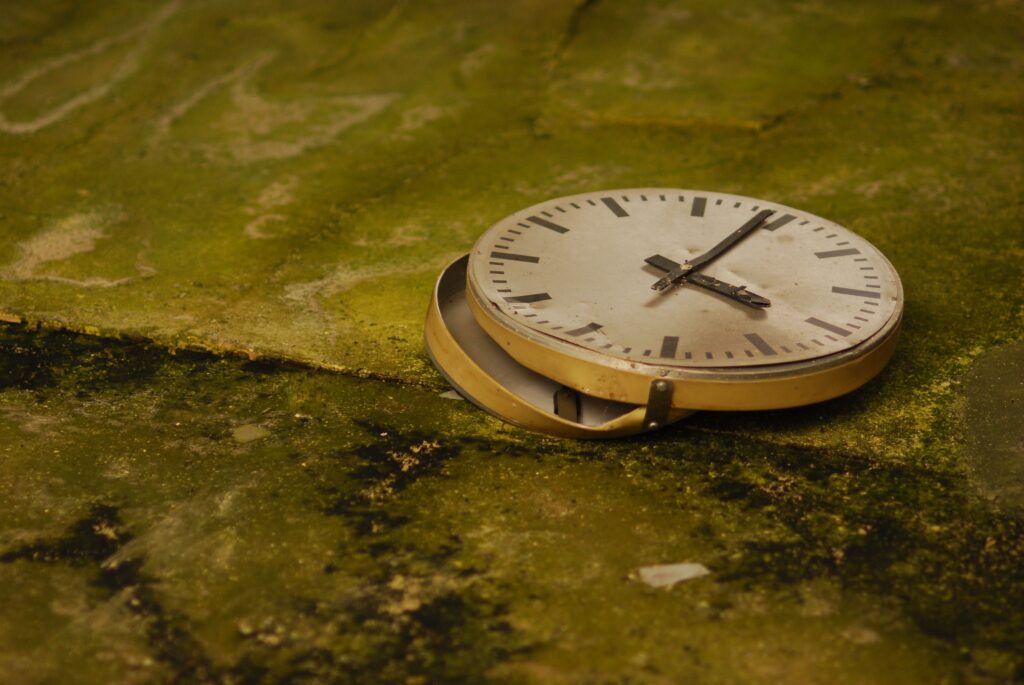
Time Is Never Neutral in Real Estate
A vacant property may appear unchanged from one week to the next.
The roof is still there.
The windows are still intact.
The walls are still standing.
But the property is not standing still.
Every day that passes creates opportunities for weather, moisture, deferred maintenance, vandalism, system deterioration, and operating expenses to affect the investment.
That is why every property has a clock.
And once an investor takes ownership, that clock matters financially.
Time can help create value when a property is being actively stabilized, improves, and managed.
But when decisions are delayed, time can quietly work against the investment.
The cost of waiting is rarely just measured in days.
It is measured in deterioration, expenses, missed opportunities, and reduced flexibility.
A Property Does Not Pause While You Decide
Investor often think about time as a scheduling issue.
When will renovation begin?
How long will construction take?
When can the property be rented or sold?
But time is also a condition issue.
While an investor is deciding what to do, the property continues responding to its environment.
Rain continues falling.
Humidity continues fluctuating.
Vegetation continues growing.
Small leaks continue to allow moisture inside.
Unprotected openings remain exposed.
Mechanical systems continue aging.
A property does not understand that an investor is still collecting estimates or waiting for financing.
The clock keeps moving.
Small Problems Become More Expensive With Time
Most property problems do not become expensive overnight.
They compound.
A missing shingle allows a small amount of water inside.
Moisture reaches the roof decking.
Then insulation.
Then drywall.
Then interior finishes.
What could have been a localized repair becomes a larger project because the problem was given time to spread.
The same pattern can happen with:
- Plumbing leaks
- Drainage problems
- Exterior wood deterioration
- Failed window seals
- Foundation moisture
- Clogged gutters
- HVAC condensation
- Pest intrusion
- Damaged siding
- Broken doors or windows
The problem itself matters.
But how long the problem is allowed to remain often matters just as much.
Time Creates Financial Costs Even When Construction Hasn’t Started
A property can cost money long before renovation begins.
Investors may continue paying:
- Property taxes
- Insurance
- Loan interest
- Utilities
- Security
- Lawn Maintenance
- HOA fees
- Property Management expenses
- Inspection costs
- Temporary repairs
These expenses do not necessarily create additional property value.
The are simply the cost of continuing to own the asset.
That means every unnecessary delay can increase the amount of money invested before the property begins producing income or moving toward sale.
A low purchase price does not automatically create a profitable investment if the property spends months accumulating expenses.
The Cost of Time Is More Than Holding Costs
Holding costs are important, but they are only one part of the equation.
Time can create several different types of costs.
- Physical Cost
Property conditions may deteriorate while repairs are delayed.
- Financial Cost
Taxes, insurance, financing, utilities, and maintenance continue accumulating.
- Operational Cost
Contractor schedules may change, materials may need to be reordered, and project sequencing can become more complicated.
- Opportunity Cost
Capital tied up in one stalled property cannot easily be deployed elsewhere.
- Market Cost
The conditions under which the property was originally purchased may change before the project is completed.
Together, these costs make time an investment variable not simply a calendar issue.
Delay Changes the Budget
An investor creates a renovation budget o the property’s condition today.
But if work does not begin for several months, the property evaluated today may not be the same property contractors encounter later.
A small roof issue may become interior water damage.
A plumbing leak may damage a subfloor.
An unsecured opening may invite vandalism.
Vegetation may interfere with drainage or exterior access.
The original estimate may no longer reflect the work required.
The is why investors should never assume that an old repair estimate remains accurate indefinitely.
Conditions changed with time.
Not Every Delay is Bad
Speed should never replace good decision-making.
There are times when waiting is necessary.
An investor may need to:
- Complete inspections
- Obtain permits
- Compare contractor bids
- Secure financing
- Resolve title issues
- Order materials
- Coordinate specialized trades
- Develop a proper stabilization plan
The goal is not to rush.
The goal is to understand the difference between productive time and passive delay.
Productive time moves the project towards a better decision.
Passive delays allow costs and risks to accumulate without improving the investment.
That distinction matters.
Stabilization Can Slow the Clock
An investor may not be ready to renovate immediately.
But that does not mean the property should remain unprotected.
Stabilization helps prevent additional deterioration while larger decisions are being made.
Depending on the property, stabilization may include:
- Securing doors and windows
- Stopping active leaks
- Removing standing water
- Addressing immediate drainage problems
- Shutting off unsafe utilities
- Protecting exposed openings
- Removing hazardous debris
- Correcting urgent electrical concerns
- Controlling vegetation
- Maintaining appropriate ventilation or moisture
- Documenting existing conditions.
These actions may not make the property beautiful.
That is not their purpose.
Their purpose is to prevent today’s problem from becoming tomorrow’s larger repair.
Every Day Should Have a Purpose
One of the most useful questions an investor can ask during a project is:
“What is the property waiting for?”
Is it waiting for a permit?
A contractor?
Financing?
Materials?
An inspection?
A decision?
Or is it simply waiting because no one has taken the next step?
That question forces investors to distinguish necessary project time from avoidable inactivity.
A property can sit for thirty days because a custom component is being manufactured.
That may be reasonable.
A property can sit for thirty days because contractor calls were never returned and no follow up system existed.
Those are very different delays.
The Longer the Timeline, the More Contingency Matters
Longer projects create more opportunities for unexpected events.
Weather changes.
Material prices change.
Contractors become unavailable.
Additional damage is discovered.
Inspections reveal new requirements.
Financing costs continue.
That means investors should evaluate not only:
“What will this renovation cost?”
But also:
“What could the timeline cost if things take longer than expected?”
A realistic project budget should account for both repair uncertainty and time uncertainty.
Documentation Helps Investors Manage the Clock
Time becomes harder to manage when nobody knows what happened or when.
Documentation provides a timeline.
Record:
- Acquisition date
- Initial property condition
- Inspection dates
- Repair discoveries
- Contactor estimates
- Stabilization work
- Permit submissions
- Work start dates
- Change orders
- Completed repairs
- Delays and their causes
This allows investors to see where time is being spent.
It also makes patterns easier to identify.
If projects repeatedly lose three weeks between inspection and contractor scheduling, that is not simply bad luck.
It may be an operational problem that can be improved.
Framework in Action
Two investors purchase similar vacant properties requiring renovation.
Investor A
Investor A intends to begin renovation soon but spends several months comparing option without stabilizing the property.
During that time, a minor roof leak continues.
Rain reaches the insulation and ceiling.
The original repair estimate no longer reflects the condition of the property.
Additional demolition, drying replacement, and interior repairs are not required.
Meanwhile, taxes, insurance, utilities, and financing cost have continued accumulation.
The property did not remain frozen while the investor decided what to do.
Investor B
Investor B also needs time before beginning the full renovation.
But immediately after acquisition, the property is inspected and stabilized.
The roof leak is temporarily stopped.
Openings are secured.
Moisture concerns are address.
Conditions are photographed and documented.
Contractor bids and financing are then then evaluated while the property is protected from additional deterioration.
Both investors needed time.
Only one allowed time to become additional damage.
Framework
The goal is not always to move faster.
The goal is to make sure time is working for the investment rather than against it.
How to Evaluate the Cost of Waiting
Before delaying an important property decision, ask:
- What could physically deteriorate during this time?
- Which expenses will continue to accumulating?
- Does anything need immediate stabilization?
- Could the repair scope increase if I wait?
- Is the delay necessary?
- What exactly are we waiting for?
- Is there a deadline for the next decision?
- Who is responsible for moving the project forward?
- Has the current condition been documented?
- Does the budget include additional time if the project runs longer than expected?
Sometimes waiting is reasonable.
But waiting should be a decision, not the default.
The Property Clock Starts Earlier Than Most Investors Think
Many investors think the important timeline begins when renovations starts.
It begins earlier.
The clock may start:
- When the property becomes vacant
- When maintenance stops
- When damage first appears
- When weather exposure begins
- When the investor takes ownership
By the time demolition begins, the property may already have spent months, or years responding to neglect.
This is particularly important with distressed and vacant properties.
Investors are often purchasing not only existing damage but also the consequences of time without intervention.
Understanding that history helps explain why two properties that appear similar on paper can require very different levels of stabilization and repair.
Time Should Be Part of the Deal Analysis
Before purchasing property, investors often estimate:
- Purchase price
- Renovation cost
- After-repair value
- Potential rent
- Financing
But the timeline connecting those numbers deserves equal attention.
Ask:
- How quickly can the property be stabilized?
- How long could permits take?
- When can contractors begin?
- How long is renovation expected to last?
- What happens financially if the project takes an additional 30, 60, 90 days?
A deal that works on a four-month timeline may look very different on an eight-month timeline.
The spreadsheet should not assume time is free.
Because it isn’t
Practical Property Clock Checklist
When evaluating a vacant or distressed property:
- Identify active problems that can worsen with time.
- Stabilize urgent conditions before cosmetic renovations.
- Estimate monthly carrying expenses.
- Estimate realistic renovation milestones.
- Build time contingency into the project plan.
- Document delays and their causes.
- Reinspect properties that sit for extended periods.
- Update repair estimates when conditions change.
- Assign responsibility for the next project action.
- Ask regularly: What is the property waiting for?
Conclusion
Every property has a clock.
It begins long before the listing goes live.
Long before the first contractor arrives.
And often long before an investor recognizes that time itself has become part of the expense.
The lesson is not that every project should move as quickly as possible.
Fast decisions can be expensive decisions too.
The lesson is that investors should use time intentionally.
Inspect.
Stabilize.
Document.
Plan.
Act.
And when waiting is necessary, protect the property while you wait.
Because deterioration does not pause for financing.
Holding costs do not pause for permits.
Moisture does not pause for contractor availability.
The clock keeps moving.
The From Vacant to Valuable Framework
Remember:
- Stabilize before you wait.
- Know what the property is waiting for.
- Separate productive time from passive time.
- Budget for time as carefully as you budget for repairs.
- Reevaluate conditions when timelines change.
- Protect the property while larger decisions are being made.
Every property has a clock. Smart investors manage it before it manages the deal.
Continue Learning
For readers who want to continue building their renovation and property preservation knowledge, I recommend reading the following:
- How Time and Holding Cost Quietly Kill Real Estate Deals
- Why Holding Costs Matter More Than the Purchase Price
- How Vacant Properties Lose Value Even When Nothing Happens
- The True Cost of Waiting Too Long to Address Property Damage
- Why Every Vacant Property Need a Stabilization Plan Before Renovation
- The First 30 Days After Buying a Vacant Property Matter More Than Most Investors Realize
- How Small Property Problems Become Expense Renovation Projects
- The Real Cost of Ignoring Small Moisture Problems