
Ghost Stock photos by Vecteezy
Distressed properties often attract investors because they appear to offer significant opportunities. Lower purchase prices, visible neglect, and the possibility of renovation can create the impression that value simply needs to be restored.
However, distressed properties rarely involve only cosmetic problems. Beneath visible deterioration there are often structural issues, financial complications, and operational risk that can dramatically affect the outcome of a real estate investment.
Successful investors approach distressed properties differently from traditional acquisitions. Instead of focusing only on potential upside, they focus first on identifying and managing risk. Understanding how to evaluate those risks before purchasing is essential to determining whether a property represents a genuine opportunity of a costly mistake.
Evaluating distressed real estate requires careful examination of physical conditions, financial exposure, market dynamics, and the timeline required to stabilize the asset.
The Risk Evaluation Framework
A simple framework for evaluating risk in distressed properties. Distressed properties can be evaluated through four primary categories of risk:
Physical Risk
The condition of the structure and its major systems, including roofing, foundation, moisture exposure, and mechanical components.

Financial Risk
The total cost of acquisition, repairs, and holding expenses, as well as the potential for unexpected costs during renovation.

Market Risk
The ability of the surrounding market to support the property’s projected value after stabilization or renovation.

Operational Risk
The complexity of managing the renovation process, including timelines, contractors, permitting, and project execution.
The complexity of managing the renovation process, including timelines, contractors, permitting and project execution.
These four categories provide a structured way to evaluate whether a distressed property represents a manageable investment or an accumulation of risk. This framework aligns with the broader principles outlined in the From Vacant to Valuable: How Real Estate Value is Created in Distressed and Vacant Properties, where value is understood as the result of discipled decision-making rather than isolated actions.
What Defines a Distressed Property.
A distressed property is generally a property experiencing financial, legal, or physical challenges that prevent it from functioning as a stable asset.
Distress can take forms:
- Properties facing foreclosure
- Vacant or abandoned homes
- Building with significant deferred maintenance
- Properties owned by lenders or government entities
- Assets suffering from prolonged vacancy or mismanagement
While these properties may be available at lower prices, they often require substantial work before they can generate reliable value.
The key challenge for investors is determining whether the level of distress represents a manageable project or a situation where risks outweigh potential returns.
Physical Condition and Structural Risk
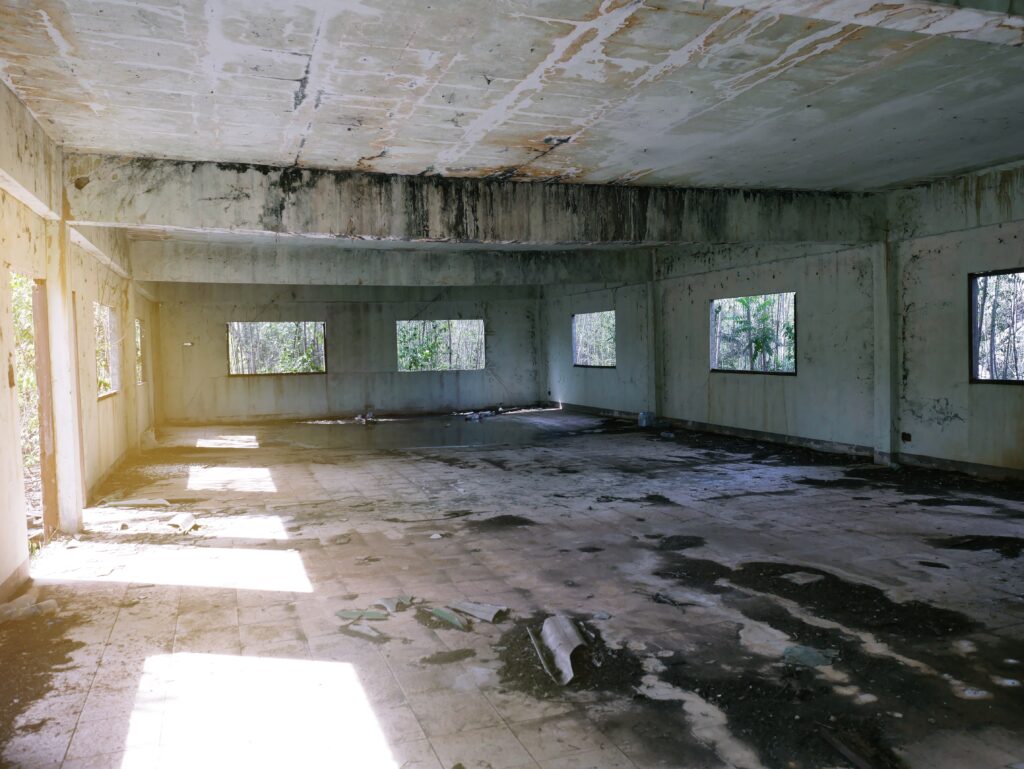
The most immediate risks in distressed properties are related to the physical condition of the building.
Visible issues may include:
- Roof damage
- Water intrusion
- Mold or moisture problems
- Foundation cracks
- Deteriorating siding or exterior systems
- Electrical or plumbing failures
While some of these problems can be repaired, structural damage can significantly increase project costs.
Investors evaluating distressed properties should pay particular attention to signs of long-term neglect, as these often indicate deeper underlying issues. Deferred maintenance can cause damage to spread through multiple systems within the property.
Water intrusion, for example, may begin as a minor roof issue but eventually affect insulation, framing, drywall, and flooring.
Thorough inspections are critical before acquiring distressed properties. In many cases, professional evaluations by contractors, inspectors, or engineers may be necessary to fully understand the scope of the required repairs.
Financial Exposure and Holding Cost
Beyond physical repairs, distressed properties often involve financial risk that can affect the viability of the investment.
These risks include:
- Unexpected repair costs
- Property tax obligations
- Insurance expenses
- Financing cost
- Extended holding periods during renovation
Holding costs are particularly important when evaluating distressed properties. Renovation timelines are rarely exact, and unexpected structural problems can delay projects significantly.
Each additional month of ownership increases expenses and reduces overall profitability. Investors who fail to account for these financial pressures often find that projects which initially appeared profitable become much less attractive over time.
Understanding the relationship between repair costs and holding costs is a critical part of evaluating distressed assets.
Market Risk and Neighborhood Conditions
Even when physical and financial risks are manageable, market conditions can still determine whether a distressed property becomes a successful investment.
Investors should carefully evaluate:
- Neighborhood stability
- Demand for renovated properties in the area
- Comparable property values
- Rental demand and local occupancy trends
- Long-term development patterns
A well-executed renovation may still struggle to achieve expected returns if the surrounding market cannot support the projected property value.
Market analysis helps determine whether the effort required to restore a distressed property aligns with realistic resale or rental potential.
Operational Risk During Renovation
Renovating distressed properties introduces additional operational risks that must be managed carefully.
Common challenges include:
- Contractor delays
- Material cost fluctuations
- Permitting requirements
- Unexpected structural discoveries during renovation
- Project management complexities
These operational risks can extend project timelines and increase overall costs.
Investors who approach distressed properties without a clear plan for managing renovation and stabilization may find themselves navigating unexpected complications that significantly affect project outcomes.
Disciplined project management and careful budgeting are essential to mitigating these risks.
The Importance of Stabilization
Before renovation begins, distressed properties often require stabilization.
Stabilization focuses on protecting the property from further deterioration while the project is planned and executed. This may include securing the property, addressing moisture issues, maintaining utilities where necessary, and performing essential repairs to prevent additional damage.
Early stabilization can prevent small issues from evolving into major structural problems during the renovation process.
Properties that remain unsecured or poorly maintained during vacancy may continue deteriorating ever after purchase, increasing both repair costs and project timelines.
Evaluating Risks Before Opportunity
Distressed real estate can present valuable opportunities for investors who understand the complexities involved. However, successful outcomes depend on evaluating risk before focusing on potential profit.
Investors who carefully analyze physical conditions, financial exposure, market dynamics, and operational challenges are better positioned to determine whether a distressed property represents a viable project.
Distress alone does not guarantee opportunity. In many cases, the most successful investments are those where risks are clearly understood and managed before acquisition.
Conclusion
Distressed properties require a disciplined approach to risk evaluation. Visible neglect may signal potential value, but it can also conceal deeper structural, financial and operational challenges.
By carefully assessing physical conditions, estimating repair and holding costs, analyzing market demand, and preparing for operational complexity, investors can make more informed decisions when evaluating distressed real estate.
Understanding risk is ultimately what allows investors to transform distressed properties into stable and productive assets.