
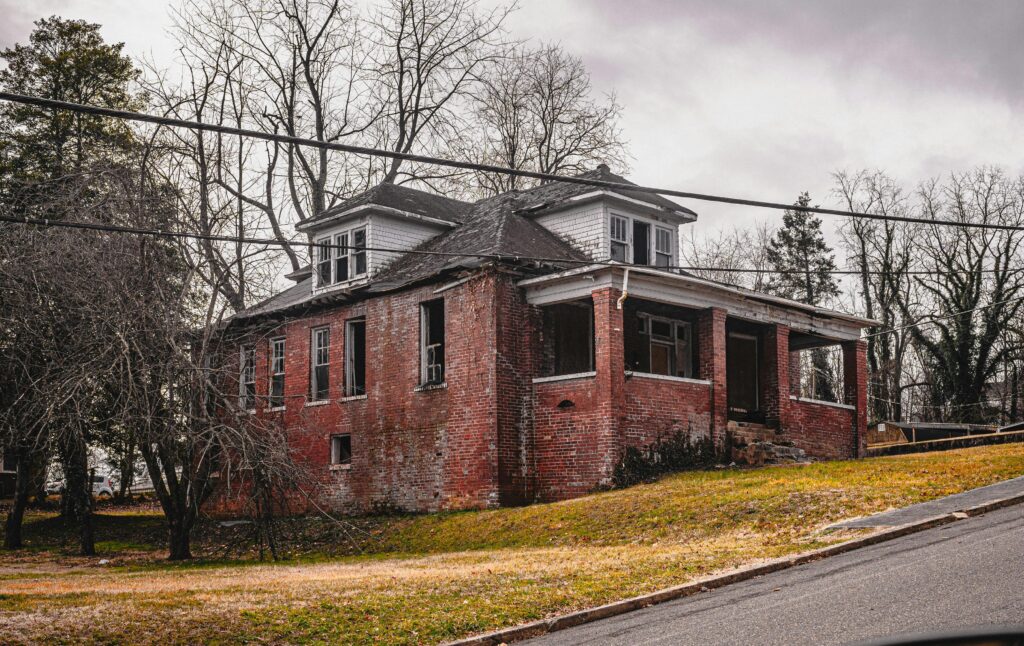
Investing in vacant properties is often discussed in terms of opportunity, but less often in terms of responsibility. Without tenants, income, or daily oversight, vacant properties place a greater burden on decision-making and execution. Small missteps are less forgiving, and early assumptions tend to have lasting consequences.
This form of investing is not inherently risker, but it is less tolerant of inattention. Carrying cost continue, exposure increases, and timelines matter. Success depends les on speed or creativity and more on discipline-particularly during periods when a property is unproductive.
Vacant-property investing also demands a different way of evaluating value. Because income is deferred, decisions made during the acquisition and holding have a disproportionate impact on outcomes. Preservation, stabilization, and realistic sequencing become central, not secondary considerations.
This article provides a practical framework for understanding how to approach real estate investing when properties are vacant. Rather than focusing on tactics or returns, it examines the structure of decision-making required to manage risk, protect value, and create viable options over time. Vacant-property investing depends on understanding how value is created over time, not just how it appears at exit. To understand this approach, it helps to begin with why vacant properties differ from occupied assets in the first place.
Why Vacant Properties Are Different
Vacant properties operate under a different set of conditions than occupied real estate. Without regular use or oversight, the systems that typically reveal issues early-tenants, routine maintenance, daily activity-are no longer present. As a result, problems tend to surface later and at a higher cost. Without regular oversight, vacant properties deteriorate quietly unless deliberate preservation is in place.
One of the most immediate differences is the absence of income. Carrying cost such as taxes, insurance, utilities, and maintenance continue, but there is no offsetting cash flow. This shifts the focus from yield to cost control and risk management, particularly during the holding period.
Vacancy also increases exposure. Unoccupied properties are more vulnerable to weather, environmental wear, and unauthorized access. Small issues-minor leaks, unsecured entry points, deferred exterior maintenance-can escalate quickly when they are not addressed promptly. Preservation becomes essential not because a property is improving, but it must be protected from avoidable loss.
Decision-making is also affected. Vacant properties often involve incomplete information. Systems may be offline, maintenance history may be unclear, and timelines may be uncertain. This requires a more conservative approach to assumptions and a greater emphasis on stabilization before committing to long-term strategies.
Taken together, these factors make vacant-property investing less about aggressive execution and more about discipline under uncertainty. The margin for error is narrower, but so is the reliance on momentum. When approached thoughtfully, vacant properties reward careful sequencing and consistent oversight rather than speed. These conditions make it especially important to understand risk before focusing on potential returns.
Understanding Risk Before Returns
In vacant-property investing, returns are often discussed before risk is fully understood. This inversion leads to distorted expectations and, in many cases, preventable losses. A more reliable approach begins by identifying where risk actually resides and how it evolves over time.
Risk in the context is not a single variable. It is layered.
Acquisition risk involves paying a price that does not reflect true condition, timelines, or required intervention. Vacant properties frequently lack recent data, making early assumptions especially influential. When acquisition decisions are based on incomplete information, downstream flexibility is reduced.
Holding risk emerges once the property is under control but not yet productive. Carrying costs accumulate, exposure persists, delays introduce pressure. Preservation plays a central role here, not as a value-add, but as a mechanism for containing risk while decisions are refined. Preservation functions as a risk management discipline during periods of vacancy.
Execution risk is introduced through implementation. Even well-considered strategies can fall if coordination is inconsistent, priorities shift, or scope expands prematurely. In vacant properties execution risk is magnified because deterioration continues in the background while attention is divided.
Understanding these risks before projecting returns changes how opportunities are evaluated. Rather than asking what a property could become, discipline investors ask what must be managed, protected, and stabilized first. Returns are then assessed as a function of how effectively those risks are controlled over time. Returns emerge from disciplined execution rather than timing alone.
This perspective does not eliminate uncertainty, but it restores proportionality. It ensures that optimism is tempered by structure, and the enthusiasm is matched with preparation. In vacant-property investing, this balance often determines whether outcomes are sustainable or accidental. Once risk is understood, the next step is evaluating whether vacant property can realistically support the strategy being considered.
Evaluating a Vacant Property
Evaluating a vacant property requires a different lens than evaluating an occupied one. Without income or regular use, the focus shifts away from performance metrics and toward recoverability, exposure, and sequence.
The first consideration is location fundamentals. Vacancy does not negate location quality, but it can obscure it. Neighborhood stability, long-term demand, and regulatory environment matter more than short-term conditions. A vacant property in a resilient area may justify patient stabilization, while one in a declining market may not support extended holding regardless of price.
Next is condition versus recoverability. Visible deterioration does not always indicate permanent loss. But it does signal risk. The key question is not how much work is required but whether the underlying structure and system can be stabilized without disproportionate cost. Preservation helps clarify this distinction by slowing further decline and allowing more accurate assessment over time.
Timeline realism is equally important. Vacant properties rarely move according to ideal schedules. Permits, inspections, financing, and coordination often take longer than anticipated. Evaluations should assume delay rather than efficiency, and strategies should remain viable even if timeline extends.
Preservation requirements during the holding period must also be factored into evaluation. Stabilization, security, and routine oversight are not optional expenses-they are the cost of maintaining optionality. Stabilization protects recoverability by preventing avoidable decline. Ignoring these requirements can distort perceived returns and introduce avoidable pressure later in the process.
Taken together, these factors shift evaluation away from optimism and toward resilience. A viable vacant-property investment is not one that promises the highest upside, but one that can absorb uncertainty without compromising its long-term potential. Careful evaluation ensures that decisions are based on what the property can realistically support, not what outcomes are hoped for. Once a vacant property is acquired, preservation becomes the primary tool for managing during the holding period.
The Role of Preservation During the Holding
The holding period is where many vacant-property investments are quietly won or lost. Once acquisition is complete and before any long-term strategy is executed, the property enters a phased defined by exposure rather than progress. Preservation exists to manage that exposure.
During holding, a vacant property is not static. Weather, time and inactivity continue to affect the condition, even when no visible changes are apparent. Small issues- moisture intrusion, unsecured access points, deferred exterior maintenance-can compound quickly if they are not addressed. Preservation intervenes early, slowing deterioration and preventing minor problems from becoming structural liabilities.
Preservation also provides continuity. Regular oversight creates a feedback loop, allowing conditions changes to be identified before they escalate. This continuity is especially valuable when timelines extend or when decisions are delayed due to financing, permitting, or market conditions. Rather than reacting to surprises, preservation enables informed adjustment.
From an investment perspective preservation protects optionality. A stabilized property remains flexible. It can be repositioned, improved, sold, or held without being forced into decisions by decline or urgency. When preservation is neglected, options narrow, and strategy becomes reactive than deliberate.
It is important to recognize preservation during holding as an ongoing management function, not a temporary measure. Effective preservation assumes that conditions will change and that oversight must adapt accordingly. This discipline reduces variability and supports more reliable outcomes over time. The broader purpose of preservation is explained in detail in What Property Preservation Really Means and Why it Matters.
Viewed this way, preservation is not an ancillary cost of vacant-property investing. It is a central mechanism for controlling risk, preserving value and ensuring that the holding period serves the purpose rather than undermining it. How a property is preserved during holding also influences which exit strategies remain viable.
Exit Strategies and Their Implications
Exit Strategies are often discussed as outcomes-sell, rent, or reposition- but in vacant- property investing, they function more accurately as constraints. Each potential exit places limits on what decisions make sense during acquisition, holding, and stabilization.
A strategy focuses on sale emphasizes clarity and condition. Preservation during holding must ensure that deterioration does not compromise marketability or inflate buyer uncertainty. Stabilization choice affect inspection results, pricing leverage, and time on the market. Even when improvements are minimal, disciplined preservation protects the asset’s credibility.
An exit centered on rental introduces different considerations. Functional systems, habitability standards, and long-term durability become more significant. Preservation during holding helps ensure that systems remain recoverable and that deferred issues do not accumulate into barriers to occupancy. Early neglect can turn a viable rental strategy into an expensive rehabilitation effort.
Repositioning or redevelopment strategies require the greatest flexibility. Timelines are often longer, approvals more complex, and capital deployment more staged. In these cases, preservation protects optionality by keeping the property stable while plans evolve. Without it, delays become costly and force premature commitments.
The common thread across all exit paths is sequence. Preservation and stabilization occur before the exit strategy is fully realized, yet they influence which exits remain viable. When early decisions are aligned with a realistic range of outcomes, investors retain control. When they are not, strategy becomes reactive.
Understanding exits as part of an integrated process-not a final step-reinforces why vacant-property investing rewards foresight and restraint. The goal is not to predict the perfect outcome but maintain conditions that allow sound decisions to be made when the time comes. Even with a clear strategy, outcomes often diverge because of avoidable mistakes made early in the process.
Common Mistakes New Investors Make
Most challenges in vacant-property investing do not stem from unforeseen events but from misaligned assumptions. New investors often approach vacant properties with the right intentions but underestimate how quickly small oversights can compound.
One common mistake is underestimating timing. Timelines for inspections, permitting, financing, and coordination frequently extend beyond expectations. When strategies depend on ideal timing, delays introduce pressure that forces reactive decisions. Disciplined investors plan for extensions rather than efficiency.
Another frequent error is treating preservation as optional. Because preservation does not produce visible progress, it is sometimes deferred in favor of perceived momentum. This approach often results in higher costs later, as deterioration accelerates during periods of inactivity. Preservation protects value precisely when progress appears slow.
Overleveraging early is also a recurring issue. Vacant properties require flexibility, yet aggressive financing reduces margin for error. When carrying cost rise or timelines shift, heavily leveraged positions amplify stress and narrow available options.
Finally, many new investors confuse optimism with strategy. Confidence in a desired outcome can overshadow the need for structure, sequencing, and restraint. In vacant-property investing, enthusiasm must be matched with preparation. Decisions made under pressure tend to lock in loss rather than create opportunity.
Recognizing these patterns is not about avoiding complexity, but about respecting it. Vacant properties demand attention to process, not shortcuts. Those who adjust their expectations accordingly are better positioned to manage uncertainty and protect long-term potential.
Conclusion
Vacant-property investing rewards discipline more reliably than speed. Without income, momentum, or daily oversight, these assets place greater weight on early decision and ongoing management. Preservation, stabilization, and realistic sequencing are not secondary considerations-they are the framework that supports every viable outcome.
Approached thoughtfully, vacant properties are not speculative assets. They are properties in transition, requiring structure during uncertainty and restraint before improvement. When risk is acknowledged and managed deliberately, value creation becomes a function of execution rather than chance.
For investors willing to prioritize process over optimism, vacant properties offer a clear lesson: long-term outcomes are shaped quietly, through informed decisions made well before result are visible. In vacant-property investing, discipline is not a limitation- it is the mechanism that makes opportunity durable.