
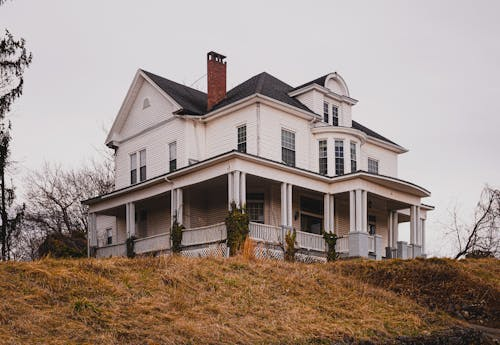
Vacant properties rarely fail all at once. Instead, they decline quietly- through exposure, neglect and small unresolved issues that compound over time. By the time visible damage appears, much of the value has already been lost.
Property preservation exists to help interrupt that decline.
At its core, property preservation isn’t about improvement or renovation. It is more about stabilization or protecting a property from further deterioration while decisions are being made about the home’s future. For investors, lenders and municipalities, preservation is often the difference between a recoverable asset and an irreversible loss.
Despite its importance, property preservation is frequently misunderstood. It is often treated as an afterthought, a temporary expense, or a checklist item rather than a strategic function. This misunderstanding leads to avoidable cost, extended holding periods, and diminished outcomes.
This article explains what property preservation actually involves, why it matters, and how it fits into the broader process of turning vacant properties into valuable assets. Rather than focusing on tactics alone, it looks at preservation as a foundational discipline- one that quietly supports every successful real estate outcome that follows. To understand why preservation matters, it’s first necessary to clarify what the term truly means-and what it does not.
What is Property Preservation
Property is the process of stabilizing a vacant or distressed property to prevent further deterioration. Its purpose is not to improve the property or increase its market appeal, but to protect existing value while longer-term decisions are made.
At a basic level, preservation addresses the vulnerabilities that emerge once a property is no longer occupied or regularly maintained. These vulnerabilities are predictable: weather exposure, deferred maintenance, unauthorized access, and environmental damage. Left unaddressed, they accelerated decline and increased the cost- and complexity- of any future recovery.
Preservation is therefore a protective function, not a cosmetic one.
It typically includes actions such as securing entry points, managing water intrusion risks, maintaining exterior conditions, and addressing safety hazards. The specific task may vary depending on location, climate, and regulatory requirements, but the objective remains consistent: prevent the property from getting worse.
Importantly, property preservation operates in the space between neglect and renovation. It is what happens after a property becomes vacant, but before a final strategy-sale, rehabilitation, rental or redevelopment-is executed. This period is often underestimated, yet it is where much of a property’s value is either protected or quietly lost.
Another common misunderstanding is the assumption that preservation is temporary or passive. In reality, effective preservation requires ongoing attention. Conditions change, season shift, and small issues can quickly become costly problems if they are not monitored process.
Understanding property preservation in these terms-stabilization rather than improvement, protection rather than enhancement-is essential. Without this clarity, it becomes difficult to evaluate cost accurately, manage risk, or make informed decisions about the property’s future. To appreciate the role preservation plays, it helps to understand why properties become vacant in the first place.
Why Properties Become Vacant
Properties become vacant for many reasons, but vacancy itself is rarely the result of a single event. More often, it is the outcome of financial pressure, market shifts, or prolonged misalignment between a property and its use.
In some cases, vacancy follows foreclosure or default, where ownership changes hands before a clear plan for the property is established. In others, properties are vacated intentionally-due to relocation, inheritance, redevelopment plans or changing neighborhood dynamics. Economic downturns, rising operating costs and shifts in local demand can also render once-functional properties temporarily unviable.
Regardless of the cause, vacancy creates a critical transition period.
Once a property is no longer occupied, the system that quietly protect it- regular use, climate control, routine observation-begin to fail. Minor issues that world normally be noticed and addresses early go unresolved. Water intrusion, weather exposure, pest activity, and unauthorized access become more likely. Over time, these conditions compound.
Vacancy also introduces uncertainty. Ownership may be unclear, timelines may be fluid, and decisions are often delayed while financial, legal or strategic questions are resolved. During this period, the property continues to age- sometimes rapidly- without a clear steward.
It is within this gap between vacancy and resolution that preservation becomes essential.
Without deliberate intervention, vacant properties deteriorate not because of neglect alone, but because no system is actively managing risk. Preservation fills that role. It provides structure and oversight during a phase when properties are most vulnerable to irreversible loss.
Understanding why properties become vacant- and what happens when they do helps clarify why preservation is not optional. It is the response to a predictable set of risks that arise whenever a property falls out of active use. Once a property becomes vacant, the risks are not theoretical. They are immediate and preservation is the mechanism that contains them.
How Preservation Protects Long-Term Value
Long term value in real estate is rarely created by a single decision. More often, it is protected through a series of small, disciplined actions that prevent loss while future opportunities are evaluated.
Property preservation plays this protective role during periods of uncertainty. When a property is vacant, its exposure to risk increases dramatically, but those risks are not always immediately visible. Preservation works by addressing the conditions that cause gradual, compounding decline- often before the damage becomes obvious.
One of the most significant threats to value is water intrusion. Even minor leaks, when left unchecked, can compromise structural components, create environmental hazards, and dramatically increase rehabilitation cost. Preservation effort that focuses on securing roofs, sealing openings, and managing drainage help contain these risk early.
Security is another critical factor. Vacant properties are more vulnerable to unauthorized access, vandalism, and theft. Beyond the immediate cost of damage or loss, these issues can introduce liability concerns and neighborhood impact that affect future marketability. Preservation measures that secure access points and maintain visibility reduce both physical and reputation risk.
Environmental exposure also accelerates deterioration. Seasonal changes, temperature fluctuations, and prolonged inactivity can stress mechanical systems and building materials. Preservation routines that include periodic inspections and basic maintenance help ensure that systems remain functional- or at least recoverable- when a long-term strategy is implemented.
Perhaps most importantly, preservation protects optionality.
By stabilizing a property, preservation keeps future paths open. Whether the eventual outcome is sale, rehabilitation, rental, or redevelopment, a preserved property offers more flexibility and requires fewer compromises. Deferred preservation, by contrast, narrows options and forces decisions to be made under pressure, often at greater cost
Viewed this way, preservation is not merely lan expense- it is a risk management strategy. It absorbs modest, predictable costs in exchange for avoiding larger, less controllable losses later. Over time, this discipline has a measurable impact on both financial outcomes and decision quality. Understanding how preservation protects value also requires understanding what it is not- and where its limits lie.
Preservation vs. Renovation: What Preservation is Not
One of the most persistent misunderstandings in real estate is the tendency to treat property preservation and renovation as interchangeable. While both involve work on a property, they serve fundamentally different purposes and occur at very different stages in the value-creation process.
Preservation is about stability. Renovation is about improvement.
Preservation focuses on preventing further decline. Its objective is to maintain a property’s current condition and protect if from avoidable damage while future decisions are evaluated. Renovation, by contrast, is an intentional effort to enhance a property’s functionality, appearance, or market position.
Renovation assumes a clear strategy, defined scope and commitment of capital. Preservation assumes uncertainty. When a property is vacant, ownership may be unresolved, financing may be incomplete, or the optimal exit strategy may still be under consideration. In these circumstances, investing prematurely in improvements can increase exposure without delivering proportional benefit.
Another key difference is reversibility. Preservation actions are designed to be low-risk and adaptable. They aim to keep options open rather than lock decisions in place. Renovation decisions, once made are harder to undo and often commit the property to a specific path.
Confusing the two can also distort expectations. Preservation is sometimes criticized for failing to “add value”, when in reality its purpose is to prevent value loss. The value it creates is indirect but substantial: lower future costs, broader strategic flexibility, and reduced downside risk.
Understanding what preservation is not helps clarify its role in the broader real estate process. Preservation is not a shortcut to profit, nor is it a substitute for thoughtful investment strategy. It is the quiet discipline that ensures a property remains viable long enough for those strategies to succeed. When viewed in this context, preservation becomes less about maintenance and more about discipline-an essential foundation for any successful real estate outcome.
Conclusion
Property preservation rarely draws attention when it is done well. Its impact is measured not by visible transformation, but by the absence of avoidable loss. Yet its role in real estate outcomes is difficult to overstate.
Vacant properties are most vulnerable during periods of uncertainty-when decisions are delayed strategies are still forming, and responsibility is diffused. Preservation exists to manage that vulnerability. It stabilizes assets, contains risk, and ensures that future choices are made from a position of strength rather than urgency.
Understanding preservation as a discipline rather than a task changes how it is valued. It is not a substitute for renovation, nor is it a shortcut to profit. Instead, it is the foundation that allows thoughtful investment decisions to succeed. Without it, even well-conceived strategies are exposed to unnecessary risk.
For anyone involved in real estate-investors, preservation professionals or stakeholder’s navigation distressed assets- recognizing the role preservation plays is essential. Value is rarely created in a single moment. More often, it is protected quietly, over time, through informed decisions and consistent execution.